Feedback-based training in prostate multiparametric MRI (mpMRI) interpretation results in similar levels of competence for urology and radiology trainees, according to a new study.
In an article posted on 16 December by European Radiology, an international team of researchers led by Dr. Pavel Stegarescu of the Department of Diagnostic and Interventional Radiology at the Cantonal Hospital of Frauenfeld and Münsterlingen in Frauenfeld, Switzerland, shared findings from a study in which they sought to establish a benchmark for training in prostate pMRI, to inform both standards for certification and curricula in radiology and urology.
The authors wrote that, with the trend of imaging becoming increasingly multidisciplinary, urologists increasingly review prostate mpMRI themselves for biopsy targeting and surgical planning. However, there is no standard curriculum for training in mpMRI for urologists, with studies reporting only 17% to 23% of urology trainees having received standardized prostate mpMRI training, with limited understanding of PI-RADS scoring components. Furthermore, there is no consistent, established metric to determine their proficiency.
To compare cross-specialty learning and establish a benchmark for the development of proficiency, the researchers had fourteen trainees (10 in radiology, 4 in urology) prospectively interpret 200 cases using a feedback-based platform.
The radiology trainees had a median of 2.7 years of experience in imaging, while the urology trainees had no imaging experience; none had experience with prostate mpMRI.
The performance metrics used in the study included agreement with expert consensus reference for PI-RADS v2.1 (≥ 3), PI-QUAL v2 image quality, extraprostatic extension (EPE) grading, and readout time.
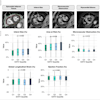
 (a-c) Learning curves for the primary outcome of PI-RADSv2.1 classification (≥ 3 vs < 3) across 200 prostate multiparametric MRI cases showing performance trajectories for radiology and urology trainees. Fitted models: generalized estimating equations with cubic splines. (a) Overall percent agreement with the consensus reference standard. Dashed vertical lines indicate inflection points from segmented regression analysis. (b) Sensitivity learning curves showing proportion of positive reference cases correctly identified. (c) Specificity learning curves showing the proportion of negative reference cases correctly identified.Dr. Pavel Stegarescu et al and European Radiology
The findings showed that the learning curve reached a plateau at 69 to 75 cases for both groups; therefore, the authors set approximately 75 cases as an appropriate benchmark for establishing proficiency in mpMRI. Prior imaging experience had no significant impact on learning, except for a small, significant difference for EPE grading (impact on PI-RADSv2.1: odds ratio [OR] per year 1.06 [95% CI: 0.96, 1.16]; PI-QUALv2: 1.05 [0.99, 1.23]; EPE grading: 1.11 [1.03, 1.24]).
The final PI-RADSv2.1 agreement with the reference was similar for the specialties (urology, 80.9%, radiology, 77.4%; sensitivity/specificity of 0.84/0.8 and 0.83/0.79, respectively).
Initially, the urology trainees demonstrated higher baseline PI-QUALv2 and EPE agreement, but the radiology trainees attained equal performance levels on these metrics (PI-QUALv2: 88% vs. 89.9%; EPE: 84.6% vs. 90%). Readout times decreased markedly for both groups as proficiency increased (final difference 53.3 s [−9.4, 95.9]).
 (a-c) Learning curves for secondary outcomes. Fitted models: generalized estimating equations with cubic polynomial (a) and cubic splines (b, c). (a) PI-QUALv2 image quality assessment. (b) Extraprostatic extension (EPE) grading assessment. (c) Case readout time efficiency. Dashed vertical lines indicate inflection points from segmented regression analysis. For (a) (both specialties) and (b) (urology trainees), segmented regression could not reliably identify single transition points, as indicated by wide confidence intervals.Dr. Pavel Stegarescu et al and European Radiology
Importantly, learning was not dependent on prior imaging experience: “The minimal impact of prior radiological experience indicates that prostate mpMRI interpretation skills can be acquired by trainees from different specialties early during residency training, rather than being restricted to fellowship-level instruction as is current practice in many institutions,” the authors wrote. In other words, targeted training can level the field even without previous specialized knowledge.
Additionally, the establishment of a benchmark of around 75 cases for learning is an important finding for training programs. The authors point out that while German and Austrian radiological societies require 50 supervised cases in training, the new ACR program recommends between 100 and 150 cases.
The authors noted that their study only included routine cases, not complex pathologies or incidental findings outside the prostate -- circumstances in which more extensive radiological knowledge would be of benefit for interpretation. “Therefore, while our findings support readiness for supervised prostate mpMRI reporting, they do not indicate expert-level proficiency,” they wrote, adding that mpMRI interpretation by urologists, while important in patient care, would complement rather than replace interpretation by radiologists.
Read the full study here.